One of the most common mistakes we see in Glendale is assuming that a standard overexcavation and recompaction will fix loose sandy fills everywhere on the lot. This works on some flat parcels near the LA River wash, but up against the Verdugo foothills the subsurface changes radically within fifty feet. We have reviewed projects where a single-family foundation cracked within three years because the contractor skipped a proper vibrocompaction design phase, treating the entire site as uniform alluvium. A vibrocompaction design in Glendale has to reconcile the deeper, water-saturated sands in the southern basin with the shallower, drier colluvial deposits on the hillside benches. Getting the grid spacing and energy input wrong means leaving loose lenses that will densify unevenly under load, and then you are chasing differential settlement before the stucco even goes up.
In Glendale’s transition zones between alluvial fan and bedrock, vibrocompaction design is not a catalog lookup—it’s a site-specific calibration backed by CPT and grain-size data.
Scope of work in Glendale California
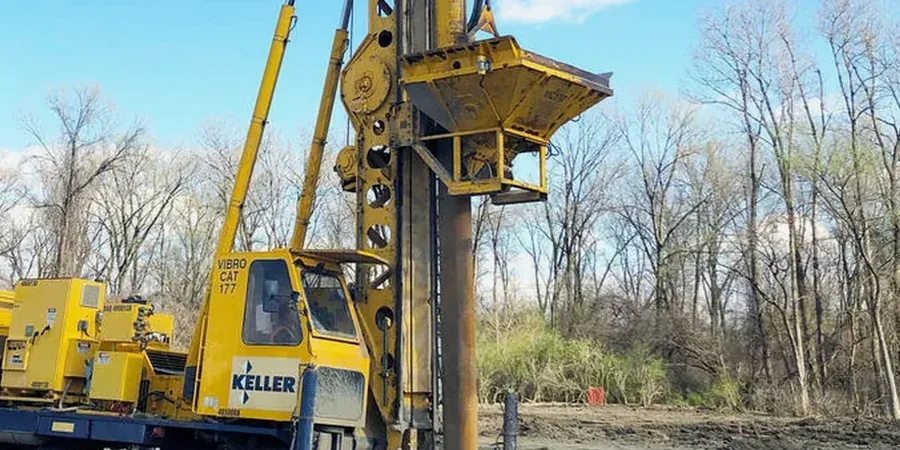
Risks and considerations in Glendale California
Glendale’s population of roughly 196,000 lives in a basin where the 1994 Northridge quake produced PGA values that heavily influenced today’s ASCE 7 seismic site classification. Loose alluvial deposits that remain untreated can amplify ground motion and trigger seismically induced settlement—a risk that grows exponentially when a builder skips vibrocompaction design and opts for shallow compaction alone. If the subsurface has a liquefiable layer below 15 feet, the structure may pass a short-term plate load test yet still undergo inches of sudden settlement during a design-level event. The cost of retrofitting post-construction far exceeds the cost of a targeted vibrocompaction program designed with pre-CPT data and calibrated to a minimum N-value of 15 to 20 blows per foot post-treatment. In the hillside zones, an incomplete design also risks lateral spreading where loose sands dip toward the stormwater channels.
Our services
Our vibrocompaction design work in Glendale integrates the field data, analysis, and reporting that contractors and structural engineers need for a defensible permit package. Each task flows directly into the next, keeping the project timeline tight.
Liquefaction Triggering Analysis
We evaluate SPT and CPT data against the site-specific peak ground acceleration from the USGS hazard maps, using the Seed-Idriss simplified procedure to determine the factor of safety against liquefaction for each sublayer within the proposed treatment depth.
Treatment Grid and Energy Specification
We produce a detailed plan showing vibrator entry points, spacing, depth targets, and amperage hold times for each pass. The specification is written to be bid-ready by specialty ground improvement contractors working in the LA metro area.
Pre- and Post-Treatment CPT Verification
Using ASTM D5778, we run cone penetration tests on the baseline grid and repeat them after compaction. The side-by-side tip resistance and friction ratio plots become the core evidence package for the building official.
IBP Acceptance Report for Building Permits
We compile the design assumptions, field logs, CPT overlays, and a signed statement of conformance with IBC Chapter 18 into a single report that Glendale plan check engineers can review without requesting supplementary data.
Common questions
What does a vibrocompaction design package cost for a typical Glendale commercial lot?
For a commercial site in Glendale under about 40,000 square feet, the design phase—including the pre-CPT investigation, liquefaction analysis, grid layout, and the post-treatment verification report—typically ranges from US$1,480 to US$4,760. The spread depends on the depth of the loose zone and how many CPT soundings are needed to satisfy the city’s plan check requirements.
How deep can vibrocompaction treat the sandy soils we find in Glendale?
In the alluvial deposits common to the Glendale basin, we routinely design treatments down to 45 feet. The practical limit depends on groundwater depth and the vibrator’s follower length, but most problematic loose lenses we encounter between Brand Boulevard and the Verdugo Wash sit between 15 and 35 feet, which is well within the effective range.
Is vibrocompaction effective in Glendale soils with some silt content?
It works well as long as the fines content stays below about 15 percent passing the #200 sieve. We always run a grain-size analysis on the target layer before finalizing the design. If the silt fraction is higher than 15 percent, we typically pivot the recommendation toward stone columns, because the vibratory energy cannot transfer efficiently through a cohesive matrix.
Will the Glendale building department accept a vibrocompaction design report instead of overexcavation?
Yes, provided the report demonstrates a post-treatment relative density of at least 70 percent and includes a direct comparison of pre- and post-CPT data. The Glendale plan check engineers are familiar with ground improvement—they review these under IBC Chapter 18—and they look for clear documentation that the treated soil meets the bearing capacity and settlement criteria assumed in the structural design.