IBC Chapter 18 and ASCE 7 Section 12.13 set the rules. In Glendale, the alluvial deposits from the Verdugo Mountains and the proximity to the Raymond Fault make those rules non-negotiable. A shallow foundation design here must account for rapid soil variability across short distances. We provide that design. Our approach starts with a clear reading of the site’s stratigraphy, then moves to bearing capacity calculations and settlement analysis calibrated for the 91201 to 91208 zip codes. Before breaking ground on Brand Boulevard or up in the Verdugo Woodlands, a proper test pit investigation reveals what the bulldozer will encounter. Many Glendale lots sit on older alluvium that looks firm but compresses under load. The design locks in safety from day one.
A footing that settles ½ inch more on one side than the other creates a structural crack. In Glendale’s mixed alluvium, that ½ inch can happen in 20 feet.
Scope of work in Glendale California
Risks and considerations in Glendale California
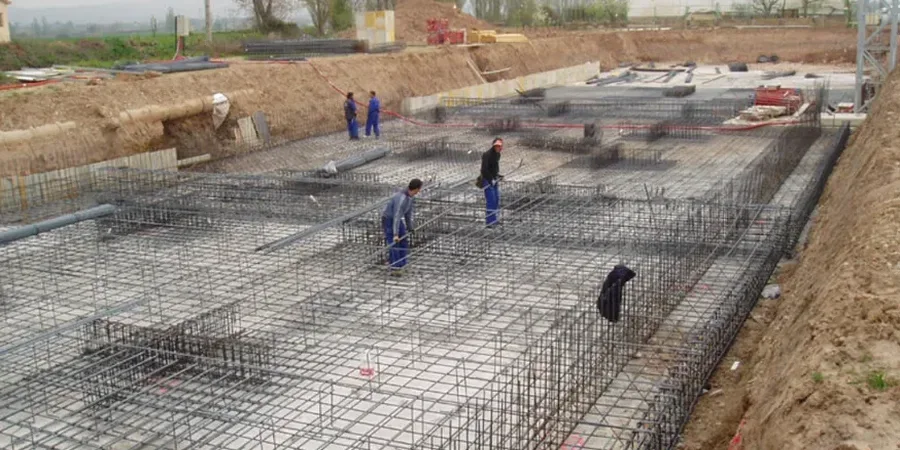
A CAT 320 excavator with a cleanout bucket exposes the bearing grade. What it reveals in Glendale is often a layer of undocumented fill. Old arroyos were buried during the 1950s housing boom. That fill is not engineered. Building a shallow foundation design over undocumented fill is the single costliest shortcut a developer can take. The repair bill after differential settlement runs five times the original design fee. We log every bucket of material and cross-reference it with the geotechnical boring logs. The design includes a requirement to remove and recompact that fill under the footing zone, or to deepen the footing to native alluvium. Ignoring a pocket of debris under one corner of the building is what turns a routine project into a legal dispute. The design is the insurance policy.
Our services
Our shallow foundation design package covers the full structural interface. We deliver the drawings, the calculations, and the special inspection schedule.
Bearing capacity analysis
We calculate ultimate and allowable bearing pressures for strip, spread, and combined footings per Vesic and Terzaghi methods. Results verified against local allowable values in the Glendale area.
Settlement evaluation
Immediate and consolidation settlement are quantified using data from SPT borings. We target the IBC limit of 1 inch total and ¾ inch differential to protect the superstructure.
Seismic foundation design
The footing size and reinforcement are checked for the overturning and sliding demands from ASCE 7 seismic loads. We factor in the site class derived from the geophysical survey.
Foundation construction support
We provide pre-pour inspections, subgrade verification, and the structural observation reports required by Glendale inspectors before the concrete is placed.
Common questions
What is the cost of a shallow foundation design for a Glendale residential lot?
For a standard single-family home on a typical Glendale hillside or flat lot, the shallow foundation design fee runs between US$2,040 and US$3,280. The exact number depends on the complexity of the soil profile, the need for fault setback studies, and the structural loads from the architect. We provide a fixed-price proposal after reviewing the preliminary floor plan and the geotechnical report.
How does the Raymond Fault affect foundation design in Glendale?
The Raymond Fault creates an Alquist-Priolo Earthquake Fault Zone that crosses through parts of north and central Glendale. A shallow foundation design within 50 feet of a mapped active trace requires a fault trenching study to prove no active strands cross the building footprint. If the site is clear, we proceed with standard footings. If a strand is found, the structure must be relocated or placed on a specially engineered mat foundation that can accommodate the offset.
What soil conditions in Glendale require a mat foundation instead of spread footings?
We specify a mat foundation when the allowable bearing pressure drops below 1,500 psf, which happens in some of the deeper alluvial pockets south of Colorado Street. Loose sands with a blow count under 10 also trigger a mat to reduce differential settlement. The decision comes directly from the SPT data and the consolidation test results.
How long does the foundation design process take from start to finish?
Once the geotechnical investigation is complete, we deliver the final stamped shallow foundation design in 10 to 12 business days. The timeline includes the bearing capacity calculations, the settlement analysis, the lateral load check, and the drafting of the foundation plan. We coordinate directly with the structural engineer to avoid any loading conflicts.