Glendale sits on a complex mix of alluvial fans and steep sedimentary formations where the Verdugo Fault runs just north of the city. Anyone building on a slope here knows the soil can shift from silty sand to weathered shale in less than 20 vertical feet. We design retaining walls by first understanding that transition. Our lab runs full grain-size distribution on site samples, measures plasticity indices, and models the lateral earth pressure the wall will actually face during a design-level earthquake. For Canyon Drive lots with cut slopes exceeding 12 feet, we often pair the wall analysis with slope stability modeling to confirm global stability before a single footer is poured.
A retaining wall in Glendale must handle both saturated backfill pressure and seismic lateral loads simultaneously, not one at a time.
Scope of work in Glendale California
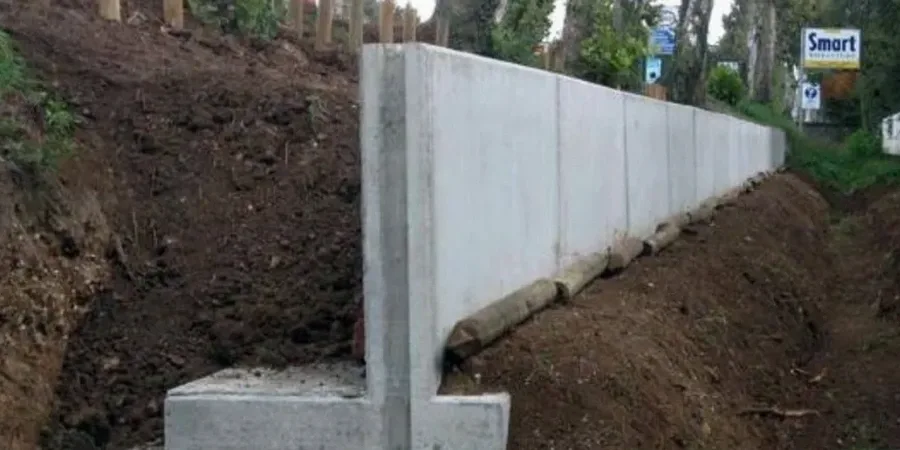
Risks and considerations in Glendale California
A 30-foot-tall block wall on Glenoaks Boulevard started rotating downhill within six months of construction. The original design had used a generic Ka value for sand but the retained soil was actually fat clay with a high swell potential. After the rainy season, the backfill zone became saturated and the lateral pressure nearly doubled. The wall had no heel drain and the weep holes were undersized for the fines content. We got called in to redesign the section: we added a gravel drainage chimney, increased the heel length, and specified a deeper key into the weathered bedrock. The repair cost was three times the original wall budget. That project is why we always run Atterberg limits and a direct shear test on the retained soil before finalizing a wall section.
Our services
Our retaining wall design package covers everything from geotechnical investigation to final signed calculations. We work directly with the structural engineer and the grading contractor to keep the submittal process moving.
Geotechnical investigation for walls
Drilling or test pitting at the wall alignment to log strata, collect samples, and determine soil parameters for analysis.
Lateral earth pressure analysis
Rankine and Coulomb calculations with seismic kh coefficient applied. We check both drained and undrained conditions for cohesive backfill.
Drainage design integration
Weep hole layout, filter fabric specification, and chimney drain geometry tied directly to the wall cross-section.
Stamped calculation package
Complete design report with sliding, overturning, bearing, and internal stem moment checks. Ready for city plan check submittal.
Common questions
How much does a retaining wall design cost in Glendale?
Engineering fees for a retaining wall design in Glendale typically range from $1,140 to $4,360, depending on wall height, complexity, and whether we need to perform new soil borings or can use existing geotechnical data. A simple 6-foot cantilever wall on a residential lot sits at the lower end; a 20-foot tiered wall with tiebacks on a commercial hillside project moves toward the upper range.
Do I need a building permit for a retaining wall in Glendale?
Yes. The City of Glendale Building & Safety division requires permits for retaining walls over 3 feet in height, and walls supporting a surcharge require engineering calculations stamped by a California-licensed engineer. We provide the full calculation package ready for plan check.
How do you handle expansive soils behind the wall?
We run Atterberg limits and expansion index tests on the retained soil. If the material is expansive, we specify a deeper drainage zone, often a gravel chimney wrapped in filter fabric, and may recommend lime treatment of the backfill to reduce swell pressure against the stem.
What seismic loads do you include in the design?
We apply the seismic coefficient kh from ASCE 7-22 based on the site class at your Glendale property. For Site Class D, SDS often exceeds 1.2g. We factor that into the Coulomb wedge analysis, increasing the active thrust and checking for potential wall rotation during the design earthquake.